
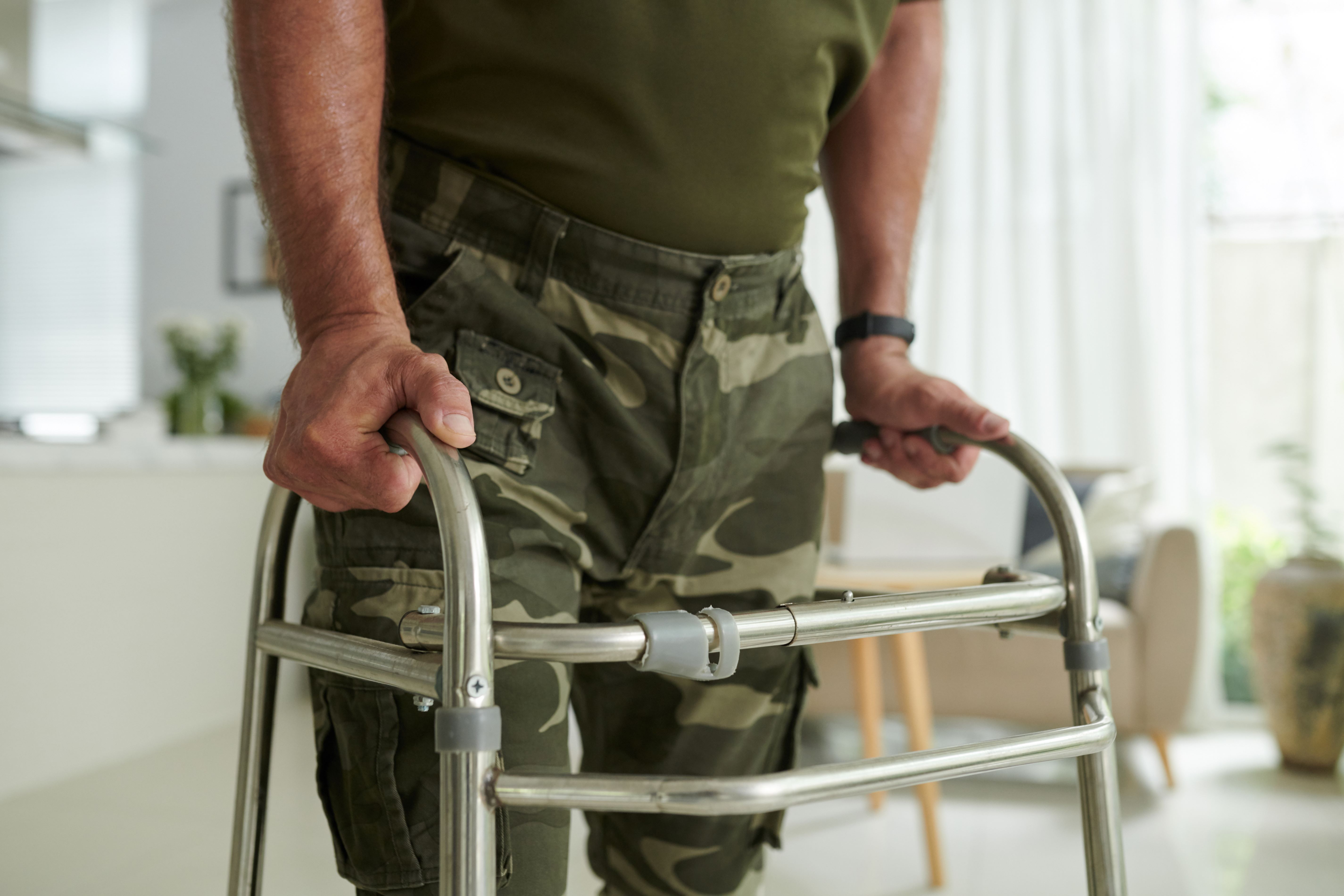
Home Care for Disabled Veterans in Haddon Township: When a Service-Related Decline Means Round-the-Clock Support
He used to get dressed in ten minutes. Now his wife waits outside the bathroom door. She listens for the sound of him steadying himself against the sink. Last month he sat on the edge of the tub for twenty minutes before calling her name.
He served two tours decades ago. A knee injury from a training exercise never fully healed. Neither did the hearing loss. For years those were manageable facts about him, not problems anyone managed around. Home care for disabled veterans usually starts this small, long before anyone calls it a crisis.
That is changing now. A missed pill here, a stumble in the driveway there, small moments that add up faster than anyone planned for. When someone needs a caregiver through the night as well as the day, that is the point where 24-hour home care in Haddon Township takes over. That one change ends up affecting almost everything else about how the week gets organized.
Why Care Needs Change Long After Service Ends
A service-connected disability rarely demands daily hands-on care right away. Take a knee that took shrapnel in 1971. It might not cause real trouble for forty years. Then arthritis in that same joint makes stairs dangerous in a way it never used to be.
Hearing damage from loud blasts during service might mean someone has avoided crowded restaurants for decades without saying why. It becomes a safety issue once it mixes with early memory changes, when he can no longer hear a smoke alarm or a knock at the door. A second condition, arthritis, hearing loss, or PTSD symptoms that get worse with age, usually forces the change more than the old injury does on its own. Together they turn a stable disability into a daily one.
The Slow Build from Occasional Help to Needing Someone There Every Day
This pattern shows up in stages a household notices only in hindsight. First it is a daughter stopping by twice a week to help with laundry. Then it is someone reminding him to take his blood pressure pills, because he forgot yesterday, and the day before that. After that comes a fall in the driveway. Nothing breaks, but it scares everyone enough that a family meeting happens.
At this stage, a caregiver providing elder care in Haddon Township often starts with just a few hours a day, someone there for meals and mobility. Nobody has said the words twenty-four hour care out loud yet. Task lists do not change overnight. What changes is how much of the day becomes dangerous if no one is present for it.
What 24-Hour Home Care for Disabled Veterans Looks Like, Day and Night
Round-the-clock care is a staffing reality before it is anything else. It means at least two caregivers rotating so someone is always awake and present. That beats one worn-out person trying to cover sixteen waking hours and sleeping lightly enough to hear a call for help. Local agencies list veterans care in Haddon Township as its own service line, a sign of how common this need has become. Daily routines, pill schedules, and physical limits tied to a service injury often look different from a usual aging-related care plan.
Medication, Mobility, and the Hours No One Else Sees
Overnight hours are where real risk builds up. They are also where a spouse or adult son or daughter is least likely to notice trouble. A veteran with nerve damage in one leg is more likely to fall getting up at 2 a.m. than at 2 p.m. He is groggy, the lights are off, and he has done this walk a thousand times without thinking about it.
Pill timing is just as risky. A dose taken four hours late, because no one was there to prompt it, can undo what the pill was supposed to do in the first place. Missed or mistimed doses like this are not dramatic emergencies most nights. They are small, repeated risks that add up because no one else sees them.
Home Care for Disabled Veterans and How VA Aid and Attendance Helps Pay for It
A household that has been paying for a few hours of help a day is not prepared for what round-the-clock care costs. Check whether VA Aid and Attendance can help cover that cost. The VA created this benefit for this kind of daily care tied to a service injury, and it requires paperwork showing daily tasks someone can no longer safely do alone. Veterans Home Care, a group that helps people work through this benefit, notes that tracking those changes as they happen moves the paperwork along faster than trying to remember them later. Households already connected to the Camden VA Clinic, the VA’s outpatient site on South Broadway, often start there, since its social workers help with paperwork like this.
Choosing Home Care for Disabled Veterans in Haddon Township
Not every home care provider has real experience with service-connected conditions. General elder care experience does not always translate here. A veteran’s hearing loss often means giving instructions face to face, not calling out from another room.
The same goes for movement limits that trace back to an old combat injury rather than usual joint wear. Home care for disabled veterans works best when an agency has briefed a caregiver on what that injury or condition means for how he moves and talks day to day. Handing over a care plan without that context falls short.
Questions to Ask Before Care Starts
Ask whether caregivers have hands-on experience with veterans and service-connected disabilities, not just general senior care. Also ask how the agency handles a night when the scheduled caregiver cannot make it. An uncovered night is the kind of failure that causes the most harm here. A household should find out from any provider of personal care support in Haddon Township how a typical overnight rotation runs, including who takes over when one caregiver’s day ends. A provider who cannot answer that clearly has probably not handled many overnight cases before.
What Changes for the Family Once Round-the-Clock Care Begins
For the family, the move to round-the-clock care often brings relief mixed with something closer to grief. A daughter who has been the one answering 2 a.m. calls for over a year finally sleeps through the night again. She feels guilty about how good that feels.
A wife who has been managing her husband’s pill schedule alone for months gets to just be his wife again during the hours a caregiver is there. She has to relearn what that role looks like. These are not small adjustments. They rarely get talked about until someone else brings them up first.
Getting Home Care for Disabled Veterans in Place Before a Crisis Forces the Decision
A fall, a wrong turn while driving, or a night in the emergency room is usually what pushes a household to act on care that has needed to change for months. Setting up care before that moment means choosing a provider on your own timeline. There is time to ask the right questions instead of making a fast decision from a hospital waiting room. A knee that took shrapnel decades ago and hearing that never came back are part of a person’s history already. Planning around them does not have to wait for an emergency to make it urgent.
Common Questions About Home Care for Disabled Veterans
Q: How do I know if my veteran family member needs 24-hour care instead of a few hours a day?
The clearest sign is trouble getting through the night alone: falls, wandering, or missed pills after dark, or you losing sleep to check on them. That pattern usually means daytime-only help is no longer enough.
Q: Does the VA pay for 24-hour home care directly?
Not directly. According to the U.S. Department of Veterans Affairs, the VA typically pays through benefits like Aid and Attendance rather than paying an agency itself, and that benefit can offset a large part of the cost for veterans and surviving spouses who qualify.
Q: What if my family member refuses to accept help?
This is common, especially among veterans who spent a career being the one who helped others. Starting with a few hours a day for one task usually helps. It feels different from framing the whole thing as full-time care right away.
Acting Before a Crisis Makes the Decision for You
A service-connected disability can sit stable for decades and then turn within a single season. Nobody has to decide everything at once. Looking into home care for disabled veterans usually starts with a single phone call, asking how a provider staffs overnight care, long before anyone has to call it a crisis.